
What Is CNC Supplier Qualification and Why It Matters
CNC supplier qualification is the documented process an OEM uses to decide whether a CNC machining supplier can make parts to specification, consistently, and with acceptable business risk. It is not only a purchasing step. It connects engineering, quality, sourcing, and production planning.
For OEM machined parts, a poor supplier decision can create dimensional rejects, surface finish issues, missing material records, late builds, and failed audits. A formal CNC Supplier Qualification process gives the buyer a clear basis for approval before production demand rises.
What is CNC supplier qualification?
CNC supplier qualification is a structured review of a machining supplier’s technical capability, quality system, inspection methods, production controls, documentation practices, and delivery reliability. According to the IAQG OASIS supplier database framework, supplier qualification is also linked to standardized aerospace-approved supplier evaluation and ongoing performance monitoring systems, which are used to assess whether a CNC supplier can maintain consistent capability across different production demands. The goal is to confirm that the supplier can make the required part under real production conditions, not just quote it.
The qualification should match part risk. Use a simple risk tier before choosing qualification depth. Low-risk parts typically need RFQ review, basic capability evidence, and sample confirmation; medium-risk parts usually add traceability checks and a controlled trial order; high-risk parts usually require documented inspection evidence, sub-tier control, and formal approval records. If the supplier cannot show the evidence required for the part’s risk tier, approval should be delayed or limited.
A simple non-critical bracket may need a lighter review than an aerospace, medical, or defense component with controlled material, tight geometric tolerances, or special finishing requirements.
Supplier selection vs CNC supplier qualification vs ongoing monitoring
Table: decision purpose, activities, outputs
| Activity | Decision purpose | Typical activities | Výstup |
|---|---|---|---|
| Supplier selection | Choose possible sources | Market search, RFQ comparison, cost review, basic capability review | Shortlist of possible suppliers |
| CNC supplier qualification | Decide whether a supplier can be approved | RFQ package review, certificate verification, sample parts, FAI, audit, trial order | Approved, conditionally approved, or rejected supplier |
| Ongoing monitoring | Confirm continued performance | Scorecards, incoming inspection data, NCR review, re-audits, corrective actions | Maintained approval, probation, re-qualification, or removal |
Supplier selection often asks, “Who can quote this work?” CNC supplier qualification asks, “Who can make this part correctly and keep making it correctly?” Ongoing monitoring asks, “Is the approved supplier still performing?”
Comparison between CNC machining suppliers and contract manufacturers
A CNC machining supplier usually focuses on machined components such as CNC frézování, turning, Swiss machining, 5-axis machining, inspection, and related finishing coordination. A contract manufacturer may manage a wider scope, such as assembly, purchasing of multiple components, testing, packaging, and sometimes full product builds.
| Faktor | CNC machining supplier | Contract manufacturer |
|---|---|---|
| Core role | Produces machined parts | Manages larger production scope |
| Main qualification focus | Machine capability, tolerance control, materials, inspection | Supplier management, assembly process control, testing, documentation |
| Nejvhodnější | Custom machined components, precision parts, prototypes, production lots | Product-level manufacturing, multi-part assemblies, outsourced production programs |
| Buyer risk | Part-level quality and delivery | Part quality plus integration, supply chain, and build quality |
For OEMs buying precision components, the comparison between CNC machining suppliers and contract manufacturers matters because the approval evidence is different. A machine shop must prove process capability and inspection control for the part. A contract manufacturer must also prove control of sub-suppliers and assembly processes.

Minimum qualification evidence: certifications, equipment list, inspection capability, comparable parts
For outsourced heat treat, anodizing, plating, passivation, coating, welding, shot peen, marking, or NDT, verify who performs the work, how approved sources are controlled, and how traceability is preserved across each transfer. Approval evidence should show that the machining supplier can link the finished part to the correct material lot, processing records, and inspection results without breaks. A certificate alone is not enough if sub-tier scope, revision control, or lot identity is unclear.
At minimum, OEM buyers should request evidence that links the supplier’s claims to real capability. Useful evidence includes current quality certifications, an equipment list, inspection capability, and examples of comparable parts.
ISO 9001 is often treated as a baseline quality management system for industrial suppliers, but it is not a legal requirement for every CNC job. Medical work may require ISO 13485. Aerospace work may require AS9100. Special processes may require NADCAP depending on the part and customer flow-down requirements.
The supplier should provide an equipment list with machine types, axis count, work envelope, and inspection tools. Buyers should also request sample inspection reports from comparable parts, especially for tight tolerance features, controlled materials, complex surfaces, or custom finishes.
Feasibility: Can the CNC Supplier Make the Part Reliably?
Qualification starts with feasibility. A supplier may be able to cut metal, but that does not mean it can make the part reliably at the required volume, tolerance, finish, and documentation level.
Can the supplier manufacture the geometry, tolerance, material, and finish requirements?
Ask whether the supplier has machined the same material in similar section thickness, whether the tightest datum-related feature can be inspected with suitable measurement uncertainty, and whether special processes are controlled in-house or through approved sub-tier sources. Also confirm whether the part requires one setup or multiple setups, because each datum transfer increases positional risk. If capability depends on subcontracted processing, the control method and traceability chain should be reviewed before approval.
The first feasibility check is the match between part requirements and supplier capability. Geometry affects tool access, fixturing, cycle time, and inspection. Tolerance affects machine selection, setup control, thermal stability, cutting strategy, and measurement methods. Material affects tooling, feeds and speeds, distortion risk, and surface finish. Finish requirements affect machining passes, deburring, post-processing, handling, and packaging.
A qualified supplier should be able to explain how it will machine critical features, hold datum relationships, inspect GD&T callouts, and control surface roughness requirements such as Ra. If the supplier only confirms price and lead time but gives no technical response, that is a weak qualification signal.
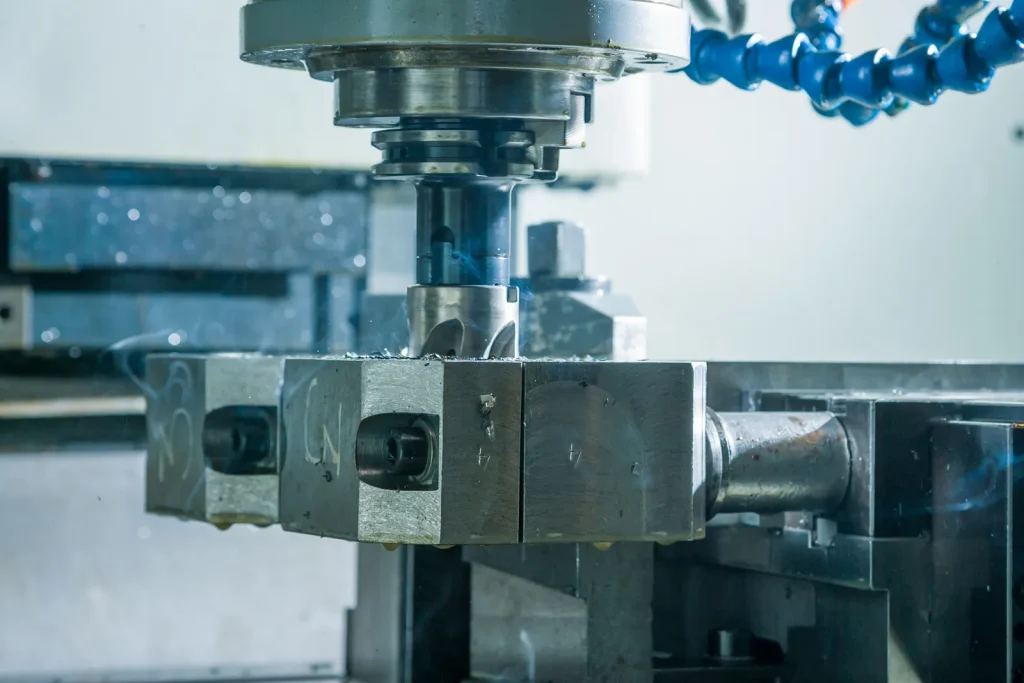
Impact of machine capability on precision machining accuracy
Machine capability affects accuracy, but the result also depends on thermal condition, maintenance state, fixturing, tool reach, probing method, and the number of setup transfers. Buyers should evaluate the full process, not only axis count or spindle specifications. A capable machine does not remove risk if the inspection plan or workholding strategy is weak.
A 5-axis machine can reduce setups for complex geometry, but it does not remove the need for process control. A 3-axis machine or otáčení center may be suitable for simpler parts if the datum structure, feature access, and tolerance stack are manageable. The qualification decision should be based on actual machine capability and comparable inspection evidence, not on machine count alone.
When CNC machining is not suitable for thin wall parts
Thin-wall parts should be reviewed for wall-height ratio, stock condition, residual stress, support strategy, and expected stability after machining. Risk increases when long unsupported features, heavy stock removal, or multiple reclamping steps can distort the final geometry. CNC may also be inefficient for very high-volume parts better suited to near-net processes, for inaccessible internal geometry, or for extreme aspect-ratio features that cannot be controlled reliably.
Limitations of low cost CNC machining for complex geometries
Low cost CNC machining can be suitable for simple parts with open tolerances and low documentation needs. It becomes less reliable when complex geometries require multiple setups, 5-axis toolpaths, tight datum control, special materials, controlled finishes, or detailed inspection reports.
The limitations of low cost CNC machining for complex geometries usually appear as hidden costs: extra setup time, scrap, rework, longer inspection time, delayed communication, and poor surface finish control. Price should not be evaluated apart from technical risk.
How CNC Supplier Qualification Works
A practical qualification process moves from low-cost screening to higher-effort validation. This prevents buyers from auditing suppliers before basic fit is known.
CNC supplier qualification process diagram: screening → RFQ → sample evaluation → audit → trial order → monitoring
Screening ↓ RFQ and supplier questionnaire ↓ Sample evaluation / FAI review ↓ On-site or remote audit, if risk requires it ↓ Trial order at limited production volume ↓ Approval decision ↓ Ongoing monitoring and re-qualification
This flow supports a risk-based decision. Low-risk parts may not need every step. Critical parts usually need documented evidence at each stage.

RFQ package checklist: CAD, 2D drawings, GD&T, Ra, material grade, certs, volumes, post-processing, packaging
Before sending an RFQ, pre-screen the longlist for process fit, part-size envelope, lot-size fit, geographic and export-control constraints, and relevant industry experience. Also check business continuity signals such as ownership stability, customer concentration, dependency on one machine cell, and recovery plans for key outside processes. This prevents wasted quoting time with suppliers that are not viable even if the price is attractive.
A complete RFQ package reduces quote variation and helps the buyer evaluate suppliers fairly.
| Položka RFQ | Proč je to důležité |
|---|---|
| 3D CAD model | Defines geometry for programming and manufacturability review |
| 2D kresba | Defines dimensions, tolerances, notes, and acceptance requirements |
| GD&T | Controls datum relationships, form, orientation, and position |
| Surface finish, including Ra | Sets machining and post-processing expectations |
| Material grade | Confirms machinability, availability, and traceability needs |
| Material certifications | Defines documentation required with each lot |
| Volume tiers | Helps assess capacity, tooling approach, and cost structure |
| Post-processing | Includes heat treatment, coating, anodizing, passivation, plating, marking, or cleaning |
| Balení | Prevents damage, corrosion, mix-ups, and finish defects during shipment |
Incomplete RFQs often lead to unclear quotes, missed finishing steps, and later disputes about acceptance criteria.
How many sample parts should you order before approval?
First article inspection (FAI) practices are widely defined in aerospace manufacturing standards such as SAE AS9102, which formalizes how initial production parts are verified before full release to production.
Typical sample range: 5–10 parts for FAI or trial evaluation, adjusted based on part risk and complexity.
Sample quantity should match the qualification objective. A small sample may be enough for dimensional confirmation on simple low-volume parts, but parts with multiple setups, difficult materials, or process-sensitive features need enough pieces to show repeatability across the intended manufacturing route. Do not treat one sample count as a universal rule. For FAI or trial evaluation, 5–10 pieces may be used to check dimensions, surface finish, documentation, and supplier response.
A sample checklist should include:
- All drawing dimensions and GD&T requirements checked against the correct datum scheme
- Critical features measured by the agreed method
- Surface finish checked where specified
- Material certificate reviewed against the purchase requirement
- Deburring, edge condition, cleaning, and packaging reviewed
- Supplier inspection report compared with buyer inspection results
- Deviations recorded and resolved before approval
One perfect sample is not enough evidence for a production decision. Multiple samples help reveal setup variation, measurement mismatch, and interpretation issues.
Trial order decision: when to use 10–20% of forecast volume before ramp-up
A trial order is useful when the supplier passes sample review but production risk remains. Trial order size should reflect annual volume, part value, cycle time, and the consequence of failure. A small controlled release may be suitable for expensive or low-volume parts, while repeat production parts may justify a larger trial that tests scheduling, documentation, and process consistency. The goal is to expose production risk without committing full demand too early.
The trial order tests more than dimensions. It checks order handling, lead time reliability, packaging, documentation, communication, and the supplier’s ability to correct issues. This step is especially useful when switching to a new CNC machining manufacturer or moving from prototype to production.
Quality Systems, Process Control, and Inspection Evidence
Quality systems do not machine parts by themselves, but they create the controls that make repeatability possible. For CNC work, the key question is whether the supplier can control the process from raw material through final inspection.
How supplier process control impacts CNC part consistency
How supplier process control impacts CNC part consistency can be seen in setup repeatability, tool wear management, in-process checks, fixture control, operator training, and inspection discipline. A weak process may make good parts during a watched sample run but drift during production.
Important controls include documented setup sheets, controlled programs, tool offset procedures, calibrated gauges, first-piece inspection, in-process inspection, and nonconforming material control. For higher-volume or tight-tolerance parts, SPC data can show whether critical dimensions are stable over time.
How inspection standards affect machined part acceptance
Inspection standards affect machined part acceptance because they define how evidence is collected and reviewed. First Article Inspection, or FAI, verifies that the first production part or batch conforms to the drawing and related requirements. AS9102 is widely used in aerospace FAI reporting.
CMM inspection is useful for complex geometry and GD&T, but the supplier must understand measurement uncertainty. A supplier should not claim it can hold a feature if it cannot measure that feature with a suitable method. SPC can support production acceptance by showing trends and variation across batches.
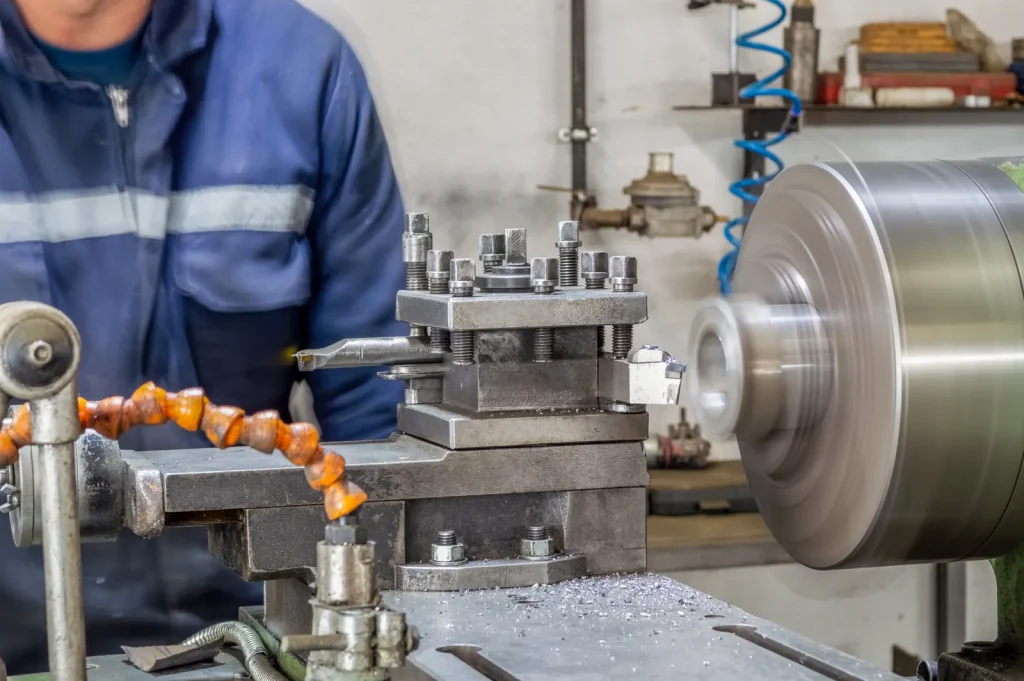
How to verify material traceability from a precision machining supplier
How to verify material traceability from a precision machining supplier starts with linking the finished part to the raw material lot. The buyer should check material certificates, purchase records, receiving records, traveler or routing documents, and part marking or lot identification when required.
Traceability is more important for regulated, safety-critical, or high-value parts. The supplier should be able to show how material is segregated, how remnants are controlled, and how lot identity is maintained through machining, outside processing, and final shipment.
Certification verification: ISO 9001, ISO 13485, AS9100, NADCAP
Supplier-provided certificates should be checked against official or recognized certification databases where available. Buyers should confirm certificate scope, site address, expiration date, and whether the certified activities match the quoted work.
ISO 9001 supports general quality management. ISO 13485 applies to medical device quality management systems. AS9100 applies to aerospace quality management. NADCAP applies to certain special processes used in aerospace and other controlled sectors. A certificate alone does not prove part capability, but a false or expired certificate is a serious risk signal.
Advantages vs Limitations of Formal Supplier Qualification
Formal qualification improves decision quality, but it must be scaled to risk. Too little qualification creates production risk. Too much qualification can slow low-risk sourcing.
Advantage: lower ramp-up risk, clearer approval decisions, better audit readiness
The main advantage of CNC Supplier Qualification is reduced ramp-up risk. Sample parts, FAI, audits, and trial orders reveal problems before full demand depends on the supplier.
Qualification also gives internal teams a clearer approval record. Engineering can see capability evidence. Quality can review inspection and traceability. Purchasing can compare cost with risk. For regulated industries, documented qualification also supports audit readiness.
Limitation: qualification depth depends on part risk, industry, and production stage
There is no single universal qualification depth for all CNC parts. A prototype fixture, a medical implant component, an aerospace bracket, and a defense housing have different risk profiles.
Qualification depth depends on end use, tolerance, material, volume, supplier history, and regulatory requirements. A supplier without ISO certification may be acceptable for a low-risk non-regulated prototype, but not for controlled medical or aerospace production where customer or regulatory requirements specify a certified system.
When overseas CNC machining suppliers are not cost effective
Table: domestic vs overseas CNC supplier trade-offs
Overseas sourcing can reduce piece price in some cases, but it may not reduce total cost when part risk, communication effort, freight, documentation, or rework increases.
| Faktor | Domestic CNC supplier | Overseas CNC supplier |
|---|---|---|
| Jednotková cena | Často vyšší | Often lower for suitable volumes |
| Lead time control | Easier for urgent changes | More exposed to transit and customs delays |
| Komunikace | Easier time-zone alignment | More risk from language and time-zone gaps |
| Audit access | Easier site visits | Higher audit cost and planning effort |
| Technické změny | Faster collaboration | Slower feedback loop |
| Total cost risk | Lower logistics risk | Can rise with rejects, freight, delays, and rework |
| Nejvhodnější | Critical parts, urgent builds, NPI, tight feedback loops | Stable designs, clear drawings, repeatable volume, controlled supplier base |
When overseas CNC machining suppliers are not cost effective, the cause is often not the quoted machining price. It is the total cost of delay, inspection burden, rejected parts, and engineering support.
How to reduce quality risk when choosing a China CNC machining supplier
How to reduce quality risk when choosing a China CNC machining supplier follows the same qualification logic as any remote supplier, but documentation and communication need more control. The RFQ must be complete, drawings must define all acceptance criteria, and the supplier should provide comparable inspection reports before approval.
Buyers should verify certifications independently, request material traceability records, use sample and trial orders, and define packaging requirements in detail. For critical parts, a domestic backup supplier can reduce supply risk even when the primary production source is overseas.
Common Failure Scenarios and Supplier Risk Signals
Most supplier failures are visible before full production if the buyer knows what to check. Qualification should look for technical, quality, and communication signals.
Risks of switching to a new CNC machining manufacturer
The risks of switching to a new CNC machining manufacturer include changed tooling methods, different fixture strategies, different inspection interpretation, surface finish variation, and material handling differences. A drawing that was clear to the old supplier may be interpreted differently by the new one.
Switching risk is higher when the part has tight datum relationships, custom finishes, undocumented tribal knowledge, or past concessions. A controlled transfer should include current drawings, revision history, inspection reports, known process risks, and a trial order before full release.
What causes dimensional variation between CNC machining batches
What causes dimensional variation between CNC machining batches can include tool wear, machine warm-up, fixture repeatability, material lot variation, operator setup differences, program edits, measurement method changes, and environmental effects in inspection.
Batch variation is not always a sign of poor machining skill. It often shows that the process lacks enough control for the tolerance being requested. For critical features, buyers should ask for process data, not only final inspection results.
Surface finish problems in outsourced CNC machined components
Surface finish problems in outsourced CNC machined components often come from tool condition, feed strategy, chatter, material behavior, burr control, secondary finishing, or handling damage. A surface finish callout such as Ra must be tied to a clear measurement location and method.
Custom finishes add risk because machining, deburring, coating, and packaging interact. If the part has cosmetic surfaces, sealing faces, sliding contact, or coating requirements, the supplier should show comparable finish data and define how parts will be protected during shipment.
Why communication problems delay custom CNC machining projects
Why communication problems delay custom CNC machining projects is simple: machining decisions depend on details. Missing answers about tolerances, material substitutions, finish requirements, or drawing conflicts can stop programming, purchasing, and inspection planning.
Poor RFQ response quality is also a qualification signal. If a supplier does not ask about unclear GD&T, special processes, or inspection requirements, the buyer should not assume the supplier understood them. Slow or vague communication becomes more costly during engineering changes and production issues.
Faktory nákladů, tolerance a doby realizace
Cost, tolerance, and lead time are linked. A tight tolerance can require better equipment, more stable setups, more inspection time, and slower machining. A custom finish can add outside processing and more handling controls.
Cost drivers in custom CNC machining for low volume production
Cost drivers in custom CNC machining for low volume production include programming, setup time, fixturing, material purchase, tooling, inspection, and finishing. Low volume parts carry setup and programming cost across fewer pieces.
Complex geometry, difficult materials, tight tolerances, deep pockets, thin walls, and custom finishes can raise cost because they increase machining time and process risk. Documentation requirements such as material certificates, FAI, and full inspection reports also add work.
Factors affecting lead time reliability in custom CNC machining
Factors affecting lead time reliability in custom CNC machining include material availability, machine capacity, tooling availability, fixture needs, inspection load, outside processing, packaging requirements, and drawing clarity.
Lead time risk increases when the supplier must wait for material certs, clarify GD&T, outsource finishing, or resolve nonconforming parts. A supplier with clear planning, capacity visibility, and fast engineering communication is more likely to meet delivery dates than a supplier that only gives an optimistic promise.
How production volume changes CNC machining supplier selection
How production volume changes CNC machining supplier selection depends on whether the need is prototype, pilot, or production. Prototype work rewards fast feedback and flexible programming. Pilot work needs FAI, documented revisions, and early process stability. Production work needs capacity, repeatability, traceability, and performance monitoring.
High-volume work may require stronger SPC practices and stable fixturing. Low-volume work may place more weight on engineering support, setup discipline, and the supplier’s willingness to handle change.
How to evaluate a CNC machining supplier for tight tolerance parts
Checklist: CMM, FAI, SPC, Cpk data, gauge calibration, comparable inspection reports
For tight tolerance parts, the buyer should evaluate both machining and measurement capability.
- CMM capability for geometry and GD&T where needed
- FAI reports for first production verification
- SPC data for repeated production features
- Cpk data where the buyer requires process capability evidence
- Gauge calibration records
- Measurement uncertainty awareness
- Comparable inspection reports from similar materials or features
- Temperature-controlled inspection when required by part risk
- Clear control of tool wear, offsets, and setup changes
A supplier that cannot measure the tolerance should not be approved to hold it without an agreed inspection plan.
Aplikace a příklady použití podle odvětví
CNC supplier qualification changes by industry because the cost of failure changes. Regulated parts need stronger documentation and audit evidence than general industrial parts.
Supplier qualification requirements for aerospace CNC machining parts
Supplier qualification requirements for aerospace CNC machining parts often include AS9100 quality system expectations, FAI reporting, lot traceability, controlled revisions, and customer flow-down requirements. NADCAP may apply when special processes are part of the manufacturing route.
Aerospace buyers should check whether the supplier’s certification scope covers the work, whether inspection records match drawing requirements, and whether outside processors are controlled.
Medical device CNC supplier qualification: ISO 13485, traceability, audit history
Medical device CNC supplier qualification often places more weight on ISO 13485, lot traceability, process validation expectations, audit history, and change control. The supplier must be able to support documentation needs, not only part geometry.
Traceability from raw stock to finished part is important. So is control of nonconforming product, corrective actions, and supplier changes that may affect the device manufacturer’s quality system.
Defense and regulated CNC parts: documentation, lot traceability, approved supplier controls
Defense and regulated CNC parts require close control of documentation, lot traceability, drawing revisions, approved supplier lists, and inspection records. Buyers may need to control where work is performed and how sub-tier suppliers are approved.
Supplier qualification should include document control, material control, and evidence that the supplier can follow contract flow-down requirements. A low price does not offset weak traceability for controlled parts.
Challenges in sourcing OEM machined parts with custom finishes
Challenges in sourcing OEM machined parts with custom finishes include finish consistency, surface preparation, coating compatibility, masking, cosmetic handling, and packaging. The machining supplier may need to coordinate outside processing, so qualification should include sub-tier control.
The buyer should define finish specifications, inspection method, acceptable cosmetic criteria, and packaging. Without this, a dimensionally correct part can still fail incoming inspection because the finish does not meet use or appearance needs.
Decision Guide: What to Check Before Approval
The approval decision should combine technical evidence, quality evidence, commercial fit, and risk. A supplier should not be approved based only on quote price.
What to check before approving a CNC parts manufacturer
Checklist: RFQ response, capability proof, certifications, samples, audit findings, trial order results
Before approving a CNC parts manufacturer, check:
- Complete RFQ response with clear assumptions and exclusions
- Proof of machine capability for geometry, size, material, tolerance, and finish
- Verified certifications where required
- Equipment list and inspection capability
- Comparable part examples and inspection reports
- Sample parts and FAI results
- Material traceability records
- Audit findings, if an audit was performed
- Trial order performance
- Corrective action response, if issues were found
- Packaging and documentation quality
- Communication speed and technical clarity
Approval can be full, conditional, or limited to certain parts, materials, processes, or volumes.
Weighted CNC supplier qualification scorecard
Table: 100-point matrix for quality, capability, delivery, communication, cost, risk
| Kategorie | Hmotnost | Co hodnotit |
|---|---|---|
| Quality system and inspection | 30 | Certifications, FAI, CMM, calibration, NCR control, traceability |
| Technical capability | 25 | Machine fit, material experience, tolerance history, surface finish capability |
| Delivery and capacity | 15 | Lead time reliability, capacity, planning, trial order performance |
| Communication and engineering support | 10 | RFQ clarity, DFM feedback, response time, issue escalation |
| Cost and total landed cost | 10 | Quoted price, inspection burden, logistics, rework risk |
| Risk and resilience | 10 | Financial continuity signals, backup options, geography, sub-tier control |
A 100-point scorecard helps compare suppliers in a controlled way. Use the scorecard together with an internal sign-off record that names engineering, quality, and sourcing approval owners. The record should state whether the supplier is approved, conditionally approved, or restricted to prototype or backup use only. For critical parts, define whether a second qualified source or backup source is required before production release. The weights can change by part risk. For critical parts, quality and technical capability should carry more weight than cost.
When is an on-site audit required?
An on-site audit is usually required when the part is safety-critical, regulated, high value, high volume, difficult to inspect after assembly, or tied to customer flow-down requirements. It is also useful when a supplier’s certificates or documents look acceptable but process evidence is weak.
The audit should check shop-floor execution: setup control, in-process checks, gauge calibration, 5S, operator training, material segregation, nonconforming product control, and inspection environment. Remote audits can support screening, but they may not reveal actual process discipline.
How often should approved CNC suppliers be re-qualified?
Approved CNC suppliers should be reviewed on a set cadence and when risk changes. Monitoring should use defined thresholds such as on-time delivery, nonconformance rate, repeat escape trend, response time, and capability evidence where the process is stable enough for that method to be meaningful. Requalification should be triggered by major process changes, ownership change, site transfer, repeated delivery failure, unresolved corrective actions, or loss of control at a key sub-tier processor. Approval status, conditions, and review records should be retained in the approved supplier file. Annual re-audits and quarterly scorecards are common best-practice references, but the actual schedule should depend on part criticality, supplier performance, industry requirements, and audit findings.
Re-qualification may be triggered by repeated rejects, late deliveries, ownership changes, process changes, certification changes, new materials, new part families, or customer complaints. A supplier that performs well for simple parts may still need re-qualification before receiving more complex or regulated work.
ČASTO KLADENÉ DOTAZY
What qualifications do you need for CNC?
For CNC supplier approval, the main qualifications are suitable machining capability, a controlled quality system, inspection equipment, material traceability, and evidence from comparable parts. Certifications such as ISO 9001, ISO 13485, AS9100, or NADCAP may be needed depending on the industry and part risk.
What are the qualifications of a supplier?
A qualified supplier has proven it can meet technical, quality, delivery, documentation, and communication requirements. For CNC machining, this means the supplier can make the part, measure it correctly, control the process, provide required records, and maintain performance over time.
What is the qualification for a CNC operator?
For OEM supplier qualification, operator qualification is usually reviewed at the system level rather than person by person. Buyers typically check whether the supplier has documented training, setup instructions, first-piece inspection discipline, and supervision appropriate to the part risk. For critical work, operator competence should be visible in audit evidence and repeatable process results.
What determines supplier qualification?
Supplier qualification is determined by part risk, industry requirements, machine capability, inspection capability, quality system maturity, sample results, audit findings, trial order performance, and ongoing scorecard data. The decision should be based on evidence, not only price or stated capability.


 Czech
Czech  English
  German
  French
  Italian
  Spanish
  Polish
  Japanese