
Choosing between aluminum 6061 vs 7075 isn’t just a matter of which alloy is stronger on paper. According to the Sdružení pro hliník, in real-world applications, engineers and designers have to balance strength, corrosion resistance, machinability, weldability, and cost. While 7075 offers higher tensile strength and hardness, 6061 aluminum has good formability and often provides a safer, more versatile option for fabricated or outdoor parts. This guide breaks down the key differences, practical trade-offs, and decision-making factors so you can select the right alloy for your project, whether it’s CNC machining, structural fabrication, or high-performance applications.
Aluminum 6061 vs 7075: what is the real decision?
The real decision in aluminum 6061 vs 7075 is not just “which alloy is stronger.” Engineers also consider types of aluminum and their differing corrosion resistance, machinability, and cost. For most engineered parts, the better question is this: does the design need the extra strength of 7075 badly enough to accept its limits in corrosion resistance, welding, forming, and cost?
That is why engineers and buyers often end up choosing 6061 even when 7075 looks better on a property chart. A part has to be made, finished, assembled, and used in a real environment. If the design includes welding, outdoor exposure, heat dissipation, or a tight budget, 6061 often fits the process better. If the part is highly loaded, fatigue-sensitive, and mostly machined rather than fabricated, applications of 7075 may justify its use.
Difference between 6061 and 7075 aluminum in one engineering summary
To put it simply, 7075 is one of the highest-strength aluminum options, while 6061 is the easier-to-manufacture option.
In a typical T6 comparison, 7075 has much higher tensile and yield strength, and it is harder. That makes it useful for highly stressed components, such as aerospace structural parts and wear-prone machined parts. On the other hand, 6061 alloy has better corrosion resistance, better thermal and electrical conductivity, and much better weldability. It is often the safer choice for general structural fabrication, housings, frames, and outdoor assemblies.
So the difference between 6061 vs 7075 aluminum alloy comes down to this: 7075 gives more strength per section size, while 6061 gives more process flexibility and fewer fabrication risks.
Why 7075 is stronger than 6061: alloying elements, temper, and design implications
If you are asking why 7075 aluminum vs 6061 aluminum, the short answer is chemistry plus heat treatment.
7075 alloy contains more zinc, magnesium, and copper. These alloying elements allow stronger precipitation hardening during heat treatment, giving it highest strength among commonly used aluminum alloys. In T6 temper, that gives 7075 much stronger than 6061 and yield strength than 6061. The same chemistry also raises hardness, which helps in wear-heavy parts.
The design implication is important. Higher yield strength means a 7075 part can resist permanent deformation better than a 6061 part of the same geometry. That can let engineers reduce section size in high-stress load paths. But this benefit is not free. The same chemistry that increases strength also tends to reduce corrosion resistance and make the alloy less forgiving in welding and forming.
So the engineer is trading process flexibility for mechanical performance.
6061 T6 vs 7075 T6 aluminum: why temper assumptions matter in comparisons
Most online comparisons assume 6061 T6 vs 7075 T6 aluminum, and that matters because temper changes properties in a major way.
T6 means the alloy has been solution heat treated and artificially aged. Both alloys benefit from this condition, but 7075-T6 reaches much higher strength than 6061-T6. Based on the provided data, 6061-T6 tensile strength is about 310 MPa, while 7075-T6 reaches about 560–570 MPa. Yield strength is about 270–276 MPa for 6061-T6 and about 480–503 MPa for 7075-T6.
A buyer should not compare one alloy in T6 to another alloy in an unspecified temper. Small differences in reported yield values across sources also show why temper and test condition assumptions matter. If the print or purchase order only says “6061” or “7075,” that is not enough for a valid engineering comparison.
Table: side-by-side snapshot of strength, hardness, density, conductivity, corrosion, and weldability
| Majetek | 6061-T6 | 7075-T6 | Engineering meaning |
|---|---|---|---|
| Pevnost v tahu | 310 MPa | 560–570 MPa | 7075 supports much higher static loads |
| Pevnost v tahu | 270–276 MPa | 480–503 MPa | 7075 resists permanent deformation better |
| Tvrdost | 95 HB | 150 HB | 7075 is better for wear and contact stress |
| Hustota | 2.70 g/cm³ | 2.81 g/cm³ | 7075 is slightly heavier |
| Tepelná vodivost | 167 W/m-K | 130 W/m-K | 6061 is better for heat transfer |
| Elektrická vodivost | 43% IACS | 33% IACS | 6061 is better for conductive parts |
| Odolnost proti korozi | Better | Dolní | 6061 is more forgiving outdoors |
| Svařitelnost | Dobrý | Poor / limited in practice | 6061 is the practical choice for welded structures |
Use values only as screening data and confirm the exact product form, temper, thickness, and governing specification before release. Typical published numbers can differ between plate, bar, sheet, extrusion, and forging, and between minimum spec values and common mill datasheet values. For deflection-limited parts, note that aluminum alloys have broadly similar elastic modulus, so switching from 6061 to 7075 improves yield margin more than stiffness.
The data used in this article reflects common industry values from technical comparison sources and typical handbook-style references, highlighting key aluminum properties for 6061 and 7075 alloys. The main caution is that some values vary slightly across sources because of temper, test method, and product form.
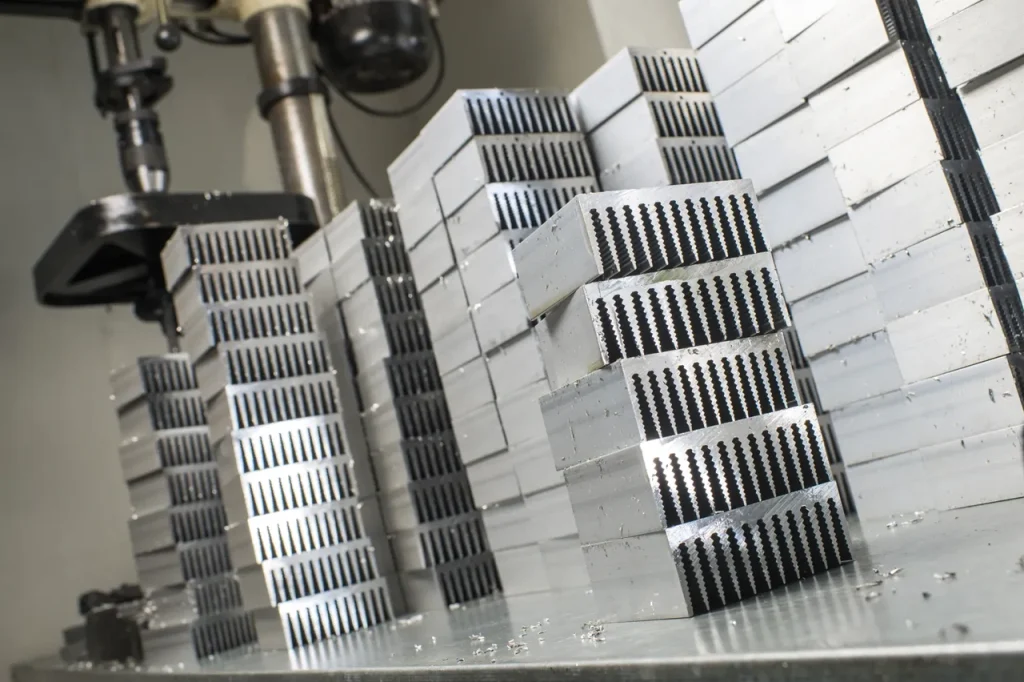
Can it be manufactured and applied in your process?
Property charts are useful, but manufacturing route is often the main filter. A part may be strong enough on paper and still be a poor choice if it needs welding, repeated bending, or heavy finishing.
6061 vs 7075 aluminum for CNC machining: what changes in cutting, tool wear, and finish
In 6061 aluminum and 7075 aluminum for CNC obrábění, both alloys are widely machined successfully, but process robustness is not identical. 7075 is commonly selected for machined high-strength parts, while 6061 is usually more forgiving across mixed geometries and general shop conditions. In practice, buyers should expect differences in burr tendency, edge condition, and tool life by part geometry and product form rather than assume either alloy is difficult to machine.
6061 is widely used for machined parts because it cuts cleanly, is easy to source, and gives good surface finish in many standard setups. It is often chosen for prototyping, housings, fixtures, and general industrial parts because shops can process it with lower risk. For engineers and buyers seeking precision CNC turning or milling services, companies like UNeed bprovide expert machining of aluminum 6061 and 7075, ensuring tight tolerances, consistent surface finish, and optimized part performance for industrial and high-stress applications.
7075 is also used for CNC parts, especially when strength or hardness matters. But machinists often watch tool wear, coating choice, and chip control more closely. The user-language insight in the research shows a practical concern: 7075 may not behave as kindly in real fabrication conditions as a simple “high strength” label suggests. That means the process window can be narrower, especially if finish quality and edge condition matter.

Machinability differences between 6061 and 7075 for production versus prototyping
The machinability differences between 6061 and 7075 matter more in production than in one-off parts.
For prototyping, 6061 is often preferred because it is common, lower-risk, and usually sufficient for fit and function checks. If the final design may still change, starting with 6061 can reduce scrap cost and sourcing delays.
For production, 7075 may make sense when the design is already locked and the extra strength allows material removal, section reduction, or better fatigue life. But if that same part later needs secondary operations like bending, welding, or outdoor service without coating, the total cost can rise. So the alloy choice should reflect the full route, not only the machining stage.
Limitations of 7075 aluminum in fabrication: welding, forming, and coating requirements
7075 is considered poorly weldable not because fusion welding is impossible in every case, but because the heat-affected zone can lose a large share of the strengthened temper and the alloy is more crack-sensitive during welding. That makes it a poor selection for welded structural service when retained strength after welding matters. If the part must be welded as part of the design intent, 6061 usually remains the safer engineering choice.
Can you weld 7075 aluminum? In general fabrication practice, it is not the preferred alloy for welded structures. That alone disqualifies it from many frames, supports, and fabricated assemblies. If joining by welding is required, 6061 is usually the more feasible choice.
7075 also often depends more on protective finishing in harsh environments. Users commonly point to anodizing or coating as necessary to manage corrosion risk. So if the part will see humidity, rain, or long outdoor service, coating requirements should be treated as part of the material choice, not a later detail.
Formability issues with 7075 compared to 6061 in bent, welded, and multi-step parts
The formability issues with 7075 compared to 6061 become important in bent parts, welded assemblies, and components with many process steps.
6061 is far more common where a design starts as plate or extrusion, then goes through cutting, bending, welding, and finishing. It can handle that route better. 7075 is better matched to parts that begin as plate, bar, or forging and stay mostly in a machined condition.
In multi-step parts, every additional operation adds risk. If the alloy is already less formable and less weldable, process yield may suffer. That is why engineers often reserve 7075 for parts where the performance gain is clear and the fabrication route is controlled.
7075 is less formable than 6061, and the limitation is most severe in higher-strength tempers such as T6. In practice, lower elongation and larger required bend radii make 7075 a poor fit for tight bends, re-forms, and multi-step fabricated parts. If the design depends on post-cut bending or forming margin, 6061 usually screens in first.
Checklist: process feasibility before material selection
Before locking the alloy, check:
- Is the part fully machined, or does it need bending or welding?
- Will it run outdoors, in humidity, or in coated service?
- Does the design truly need 7075-level yield strength?
- Is thermal conductivity important, such as for housings or heat sinks?
- Will harder material improve wear life, or is it unnecessary?
- Is the temper specified on the print and purchase record?
- Does the supply chain commonly stock the required form in the required alloy?
How alloy chemistry drives performance
The chemistry difference is the reason the two alloys behave so differently in use and in manufacturing.
How alloying elements affect 6061 and 7075 performance
If you want to know how alloying elements affect 6061 and 7075 performance, focus on the main strengthening elements.
6061 is built around magnesium and silicon. That combination gives a good balance of strength, corrosion resistance, and manufacturability. It is not the strongest aluminum alloy, but it is one of the most practical.
7075 has lower corrosion resistance in service not only as a general comparison, but also because high-strength Al-Zn-Mg-Cu chemistry is more sensitive to localized attack and stress-corrosion-related risk in demanding environments. That is why 7075 more often depends on controlled finishing and better damage management at cut edges, threads, and fastener interfaces. Bare indoor service may be acceptable, but harsher exposure needs a more deliberate protection strategy.
Why zinc, magnesium, and copper shift strength, corrosion behavior, and hardness
The question of why zinc, magnesium, and copper shift strength, corrosion behavior, and hardness matters because these are not abstract lab effects. They affect real part risk.
Zinc and magnesium help create a very strong heat-treatable alloy system in 7075. Copper also supports strength, but it tends to reduce corrosion resistance. That is why 7075 often performs very well in strength and hardness but requires more care in service environment and surface protection.
In 6061, the lower copper content helps corrosion behavior. The research notes a small inconsistency in how sources describe copper-related corrosion triggers in 6061, but they agree on the main practical point: 6061 is generally more corrosion resistant than 7075.
Thermal conductivity of 6061 vs 7075 aluminum and why it matters for housings and heat sinks
The thermal conductivity of 6061 vs 7075 aluminum is often ignored in strength-led discussions, but it matters for electronics housings and heat sinks.
6061 is listed at about 167 W/m-K, while 7075 is about 130 W/m-K. That is a meaningful gap in parts that need to move heat away from internal components. In these cases, using 7075 can solve a strength problem you may not have while creating a heat-management penalty you do not want.
This is one reason 6061 remains common in machined enclosures, heat spreaders, and industrial housings.
Table: composition ranges and property effects by element
| Alloy / element emphasis | Main effect on properties |
|---|---|
| 6061: magnesium + silicon | Balanced strength, good corrosion resistance, good manufacturability |
| 6061: lower copper relative to 7075 | Better corrosion behavior in general service |
| 7075: zinc + magnesium + copper | Much higher strength and hardness after heat treatment |
| 7075: higher copper | Lower corrosion resistance, more dependence on protective finishing |
6061 vs 7075 strength comparison and core properties
This is the section most readers search for first, but it should still be read with application context.
Tensile strength comparison of 6061 and 7075 for static load cases
In a direct tensile strength comparison of 6061 and 7075, 7075 is clearly higher. The provided data shows 6061-T6 at about 310 MPa and 7075-T6 at about 560–570 MPa.
That means 7075 is the better fit when static loading is high and section size must stay limited. In short, if a part is near its stress limit in 6061, moving to 7075 may create a useful design margin. On the other hand, if the part is already far below 6061 limits, the strength increase may have no practical value.
Yield strength of 6061 vs 7075 for permanent deformation risk
The yield strength of 6061 vs 7075 is often more important than ultimate tensile strength because yield controls when a part takes a permanent set.
6061-T6 is about 270–276 MPa. 7075-T6 is about 480–503 MPa, depending on source. That is a major gap. If the design involves clamps, brackets, load arms, or fixtures where permanent bend or local yielding is a concern, 7075 can reduce that risk. But the engineer should ask whether geometry changes, ribbing, or thicker stock could solve the same problem while keeping the easier-to-use 6061 alloy.
Shear strength of 7075 T6 aluminum versus 6061 in fastened and loaded joints
The shear strength of 7075 T6 aluminum versus 6061 matters in bolted joints, lugs, and loaded interfaces, even though the provided research does not give exact shear numbers.
Because 7075-T6 has much higher yield and tensile strength, it is commonly favored where joint bearing stress, lug loading, or shear-related failure modes are critical. In fastened assemblies, that higher strength can support smaller sections or higher clamp loads. But if the joint relies on corrosion resistance, outdoor exposure, or welded backup structure, 6061 may still be the safer system choice.
Exact shear values vary by form, temper, and specification, so this comparison should not be used as a design allowable. Use published shear data only for preliminary screening and take final allowables from the governing material specification, design code, or project standard. In joints, bulk alloy strength is only one limit state alongside bearing, tear-out, thread stripping, edge distance, preload, and corrosion control.
Strength to weight ratio of 6061 vs 7075 and where density differences matter
The strength to weight ratio of 6061 vs 7075 is one reason 7075 is used in aircraft and other high-performance structures.
7075 is only slightly denser at 2.81 g/cm³ versus 2.70 g/cm³ for 6061. That small weight increase is far outweighed by the large strength increase in high-load applications. So where every gram matters and the design is strength-driven, 7075 usually has the advantage.
If the part is not load-critical, that advantage may not matter. In that case, the higher conductivity, better corrosion behavior, and easier fabrication of 6061 can be more useful than a theoretical strength-to-weight gain.
Comparison table and bar chart for tensile, yield, hardness, density, and conductivity
| Majetek | 6061-T6 | 7075-T6 |
|---|---|---|
| Pevnost v tahu (MPa) | 310 | 560–570 |
| Mez kluzu (MPa) | 270–276 | 480–503 |
| Tvrdost (HB) | 95 | 150 |
| Hustota (g/cm³) | 2.70 | 2.81 |
| Thermal conductivity (W/m-K) | 167 | 130 |
Comparative Ratings of 6061 vs 7075 Aluminum (1–10 scale):
- Tensile Strength: 6061 – 5 / 7075 – 9
- Yield Strength: 6061 – 5 / 7075 – 9
- Hardness: 6061 – 5 / 7075 – 8
- Density: 6061 – 8 / 7075 – 8
- Thermal/Electrical Conductivity: 6061 – 8 / 7075 – 6
In this scale, higher numbers indicate better performance for that property. This makes it easy to see that 7075 excels in strength and hardness, while 6061 has advantages in conductivity and similar density.
Advantages vs limitations in real fabrication environments
Real-world alloy selection is about balancing the process, environment, and performance target.
When to choose 6061 over 7075 aluminum for weldability, corrosion resistance, and cost control
A common search is when to choose 6061 over 7075 aluminum. The answer is clear in three cases: welding, outdoor exposure, and budget control.
If the design includes welded frames or fabricated structures, 6061 is usually the practical choice. If the part will run in humid or weather-exposed service, 6061 is usually safer unless 7075 will be well protected. If the strength of 6061 already meets the requirement, the extra cost and handling limits of 7075 may not return enough value.
7075 vs 6061 corrosion resistance in outdoor, humid, and coated service conditions
In 7075 vs 6061 corrosion resistance, 6061 is generally better. Sources agree that 7075’s higher copper content hurts corrosion performance, especially in demanding environments.
For outdoor and humid service, this matters a lot. A buyer should verify whether the part depends on anodizing or other coating for durability. If coating damage is likely in service, the lower natural corrosion resistance of 7075 becomes a design risk.
Is 6061 or 7075 better for anodizing? In practical selection terms, 7075 often needs anodizing more, while 6061 is commonly chosen where corrosion resistance is needed with fewer concerns. The key point is not just whether anodizing is possible, but how dependent the design is on that coating to stay acceptable in service.
Applications where 6061 is better than 7075 despite lower strength
There are many applications of 6061 where it is better than 7075 even though it is weaker.
Examples include welded frames, outdoor support structures, machined electronics housings, heat sinks, and general-purpose structural components. In these parts, weldability, corrosion resistance, conductivity, or lower cost matter more than maximum strength.
Case 2 and Case 3 from the research show this clearly. Outdoor structural fabrication favored 6061 because it could be welded and handled weather exposure better. Electronics housings and heat sinks favored 6061 because of better conductivity, easier machining, and lower cost.
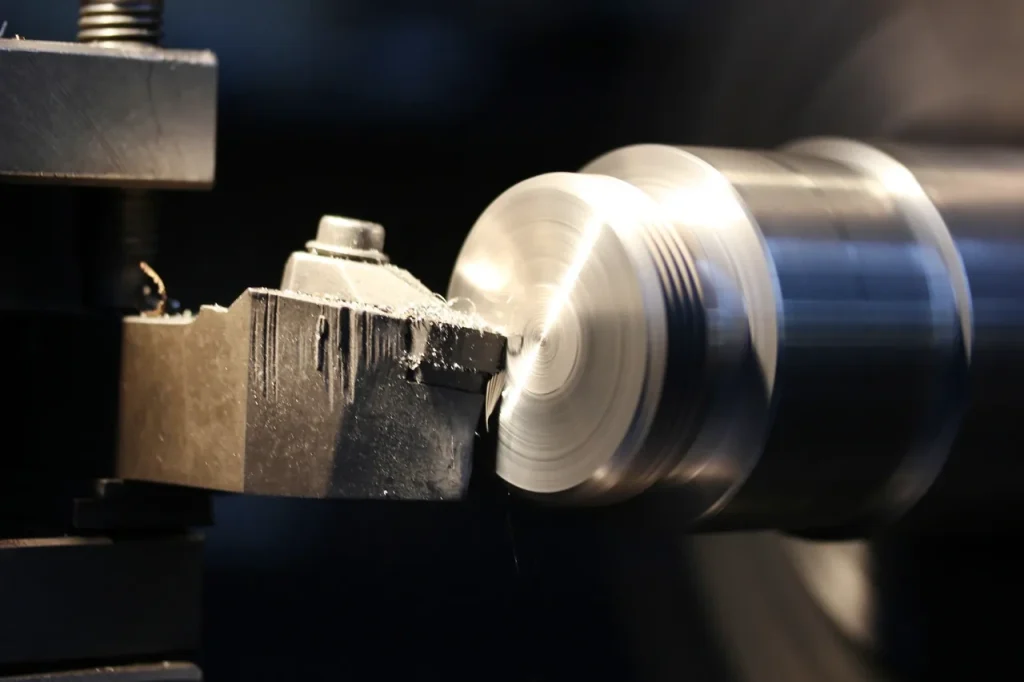
Best aluminum alloy for structural applications: when “strongest” is not the best choice
The best aluminum alloy for structural applications depends on what “structural” means in that part.
If the structure is a welded frame or weather-exposed assembly, 6061 is often the better engineering choice. If the structure is a highly stressed machined component in a controlled environment, 7075 may be better. Strongest is not always best because a structure can fail from corrosion, bad joints, fabrication defects, or excess cost just as easily as from low tensile strength.
Is 7075 always better than 6061 for structural parts?
No. 7075 is better only when the part truly needs much higher strength or hardness and the fabrication route avoids its weak points. For welded, outdoor, or cost-sensitive structures, 6061 is often the better alloy.
Common problems, risks, and failure scenarios
This is where the wrong alloy choice becomes expensive.
Risks of using 7075 instead of 6061 in welded frames, outdoor assemblies, and general fabrication
The main risks of using 7075 instead of 6061 show up when buyers choose strength first and process second.
In welded frames, 7075 is a poor fit because welding is already a known limitation. In outdoor assemblies, lower corrosion resistance means the part may rely too heavily on coatings. In general fabrication, the reduced formability can create scrap or process changes late in the project.
These are not small issues. They can change manufacturability, service life, and rework level.
Where 6061 can fail first: deflection, yielding, and wear in higher-stress designs
6061 has its own failure risks. In higher-stress designs, it can fail earlier by excessive deflection, local yielding, or wear.
This is where 6061 vs 7075 strength comparison matters in a practical way. If a bracket, arm, or lug in 6061 is bending too much or taking a permanent set, 7075 may fix the issue without increasing size. If contact surfaces are wearing too fast, the hardness gap between 95 HB and 150 HB can also justify 7075.
Corrosion, pitting, and coating dependence: what buyers should verify before release
Before release, buyers should confirm:
- expected service environment
- whether coating is required for acceptable life
- whether edges, threads, or machined pockets will remain protected
- whether the alloy choice depends on perfect finish condition
This is especially important with 7075. The research and user comments both point to corrosion and pitting concerns in real use.
Fatigue, impact, and wear scenarios: when 7075’s hardness and endurance justify the trade-off
7075 is often chosen when cyclic loading, impact exposure, or wear makes 6061 less reliable. The provided research states that 7075 excels in fatigue and impact resistance and is used in aircraft and military parts. Case 4 also supports its use in high-friction wear parts because of much higher hardness.
So if the part sees repeated stress cycles, sliding contact, or high localized loads, the trade-off may be justified. In those cases, 7075 is not overkill. It is risk control.
7075 is often chosen for high-strength, fatigue-sensitive parts, but fatigue performance depends strongly on temper, surface condition, notch sensitivity, stress ratio, and environment. Do not treat generic fatigue or impact statements as universal material rankings for every geometry. Higher hardness can help in some wear situations, but counterface, lubrication, pressure, and surface treatment still control actual wear behavior.
Can 7075 replace 6061 in every CNC or fabricated part?
No. 7075 can replace 6061 in some machined parts, but not in every fabricated part. Welding, corrosion exposure, conductivity needs, and total manufacturing cost can all make 6061 the better option.
Faktory nákladů, tolerance a doby realizace
Material choice should also reflect what happens to procurement and production.
6061 is usually cheaper and easier to source, but buyers should treat that as a market tendency rather than a fixed rule. Cost and availability can change substantially by product form, temper, thickness, region, and order volume. Before ordering, confirm stock form, certification needs, finishing requirements, and whether geometry will increase scrap or process sensitivity in 7075.
Industry-level cost trade-offs: why higher strength does not always lower total part cost
At industry level, higher strength does not always reduce total cost. A more expensive alloy can save weight or section size, but that does not help if the part then needs special finishing, stricter handling, or more scrap control.
This is why buyers asking about 6061 vs 7075 price should look beyond raw material cost. If 6061 already meets the requirement, paying more for 7075 can add cost without improving the end result.
How machinability, scrap risk, welding rework, and finishing can change total manufacturing cost
Total manufacturing cost comes from more than stock price.
Machinability affects cycle stability and tool use. Scrap risk rises when a material is less forgiving in forming or fabrication. Welding rework strongly favors 6061 because 7075 is not the preferred alloy there. Finishing cost may also rise for 7075 if corrosion protection becomes mandatory.
These cost drivers often decide the project more than a strength table does.
Tolerance and dimensional stability considerations for machined versus fabricated parts
The provided sources do not give exact tolerance numbers, so the safe engineering view is general. Machined parts usually hold dimensional targets more predictably than fabricated welded assemblies because welding can add distortion and rework. Since 7075 is used more often in machined high-strength parts and 6061 more often in welded structures, the route itself may influence dimensional stability as much as the alloy.
A buyer should ask whether the part is tolerance-critical in the machined state, or whether it will go through forming and joining steps that can shift dimensions later.
Lead time and sourcing realities: when common availability favors 6061 over 7075
Lead time often follows supply commonality. 6061 is widely used across general engineering, so common forms are often easier to source. 7075 is also available, but may be less convenient in some local supply chains or small-quantity buying.
This matches the user insight that 6061 is often easier to source locally. For urgent builds or broad product lines, that availability can matter as much as performance.
Table: total-cost drivers by application type
| Application type | 6061 cost behavior | 7075 cost behavior |
|---|---|---|
| Welded structures | Lower process risk | Poor fit due to welding limits |
| Outdoor assemblies | Lower coating dependence | May need more protective finishing |
| Machined housings / heat sinks | Good value due to conductivity and easy machining | Higher cost with little benefit if loads are modest |
| High-stress machined parts | May need larger sections | Higher material cost, but strength may justify use |
| Wear-prone components | Lower hardness may shorten life | Higher hardness may reduce wear-related replacement |
Applications and use cases by engineering priority
The best way to compare these alloys is to match them to the main design priority.
6061 or 7075 for aerospace parts: what the strength and fatigue gap means
A common question is 6061 or 7075 for aerospace parts. If the part is in a high-stress load path, 7075 is usually favored because of its large strength advantage and better fatigue performance. If the part is non-critical, corrosion-exposed, or not highly loaded, 6061 may still be used where its process advantages matter.
Case study: aerospace structural components choosing 7075 for high-stress load paths
In the provided aerospace case, high-stress structural elements such as aircraft wing-related components used 7075 because tensile strength reaches about 570 MPa and fatigue resistance is better. The result was higher load-bearing ability without a large weight penalty. This shows where 7075 earns its place: critical structures where strength margin drives the design.
Case study: general structural fabrication choosing 6061 for weldability and weather exposure
The general structural fabrication case chose 6061 for outdoor beams and frames. The reason was not maximum strength. It was better weldability, better corrosion resistance, and lower cost. The result was a more practical structure for moist service conditions.
Case study: machined electronics housings and heat sinks choosing 6061 for conductivity and ease of machining
The electronics case used 6061 for housings and heat sinks because thermal conductivity is about 167 W/m-K and electrical conductivity is about 43% IACS. It also offered easier machining and lower cost. This is a good example of why material selection should match function, not only strength.
Case study: high-friction wear parts choosing 7075 for hardness and wear resistance
In the wear-part case, 7075 was selected for gears and other friction-loaded parts because its hardness is about 150 HB compared with 95 HB for 6061. That gave better wear resistance. The trade-off was accepted because the application was driven by contact performance.
What is the best aluminum alloy for structural applications?
There is no single best alloy for all structural applications. Use 7075 where high stress, fatigue life, and section efficiency matter most. Use 6061 where welding, corrosion resistance, conductivity, and manufacturing ease matter more.
Decision guide: how to evaluate and choose
This is the point where property data becomes a selection decision.
Decision matrix: load, environment, fabrication route, conductivity, and budget
| Rozhodovací faktor | If this is the priority | Likely better choice |
|---|---|---|
| Static strength | High load, small section | 7075 |
| Yield resistance | Permanent bend must be avoided | 7075 |
| Fatigue / wear | Cyclic or contact-heavy use | 7075 |
| Welding | Welded frame or assembly | 6061 |
| Outdoor corrosion | Humid or weather exposure | 6061 |
| Heat dissipation | Housing or heat sink | 6061 |
| Elektrická vodivost | Conductive function matters | 6061 |
| Budget / easy sourcing | General industrial part | 6061 |
When to choose 6061 over 7075 aluminum
Choose 6061 when the design needs weldability, better corrosion resistance, better thermal or electrical conductivity, easier sourcing, or lower total manufacturing risk. It is also a strong default when the part is not close to its stress limit.
This covers many common use cases in common uses for 6061 vs 7075 in CNC: fixtures, housings, frames, brackets, heat sinks, and general structural parts.
When 7075 is the better choice despite corrosion and fabrication limits
Choose 7075 when the design is strength-limited, yield-limited, fatigue-sensitive, or wear-driven, and when the part is mainly machined rather than welded or bent. It is especially useful when a lighter or smaller section can only be achieved with much higher material strength.
This is where support keywords like shear strength of 7075 T6 aluminum, yield strength of 6061 vs 7075, and strength to weight ratio of 6061 vs 7075 matter in a real way.
Buyer checklist: what to confirm on temper, corrosion exposure, joining method, and property targets
Before purchase release, confirm:
- exact alloy and temper, not alloy only
- required tensile or yield target
- whether the part will be welded, bent, or only machined
- outdoor or humid exposure level
- whether anodizing or other coating is required
- whether conductivity matters
- whether hardness or wear life is a real requirement
- whether 6061 already meets the design margin
Which aluminum should I choose for CNC machining, welded structures, or high-stress parts?
Pro CNC obrábění, 6061 is often the default because it is versatile and usually sufficient. For welded structures, 6061 is the practical choice because 7075 has major welding limits. For high-stress machined parts, 7075 is often better if corrosion and finishing needs are managed.
Weighted selection matrix and project-fit checklist
Simple weighted view:
- Need maximum strength: lean 7075
- Need welding: lean 6061
- Need outdoor durability: lean 6061
- Need better heat transfer: lean 6061
- Need wear resistance: lean 7075
- Need easier sourcing and lower cost risk: lean 6061
Project-fit checklist:
- Machined only?
- Welded or bent?
- High cyclic load?
- Outdoor humidity?
- Coating required?
- Heat dissipation needed?
- Tight budget?
If most answers fall on machining, high load, and wear, 7075 is often justified. If most fall on welding, corrosion, conductivity, and cost control, 6061 is usually the better fit.
In short, aluminum 6061 vs 7075 is a decision about system fit. Choose 7075 when high strength, hardness, or fatigue resistance clearly drives the design and the part can stay within a machining-focused route. Choose 6061 when the part must be welded, weather-resistant, conductive, easy to source, or cost-controlled. Avoid selecting by strength alone, because many failures start in fabrication or service environment, not in the tensile test.

Nejčastější dotazy
When comparing aluminum 6061 vs 7075, 7075 is generally stronger. It offers higher tensile strength and hardness, making it ideal for demanding applications like aerospace or high-stress parts. 6061 is still very capable for structural or CNC projects, but it won’t match 7075 in peak performance. For parts needing maximum stiffness and durability, 7075 is the go-to, while 6061 is easier to work with for general machining.
Welding 7075 can be tricky because it’s prone to cracking due to its high zinc content. Most shops avoid welding it and prefer mechanical fastening or adhesives. Specialized techniques like friction stir welding exist, but they’re not common in standard CNC setups. For welding-friendly projects, best aluminum for CNC is usually 6061.
6061 aluminum performs better for anodizing. It creates a more consistent, durable finish, while 7075 can be unpredictable. So if your part needs a reliable anodized surface, structural aluminum like 6061 is usually preferred.
6061 is widely used for CNC parts like frames, brackets, and enclosures where good strength and machinability are important. 7075 is reserved for high-performance applications like aerospace fittings or automotive components, where strength outweighs machinability. Understanding the machinability of 7075 aluminum is important since it’s harder to cut than 6061.
6061 generally has better corrosion resistance than 7075, especially in humid or marine environments. While 7075 is stronger, it is more prone to stress corrosion cracking. Anodizing can help both, but 6061 gives a safer starting point for applications like aerospace vs structural aluminum parts.



 Czech
Czech  English
  German
  French
  Italian
  Spanish
  Polish
  Japanese