
Internal corner radii are one of the fastest ways for a CAD model to turn into a slow, risky, high-quote CNC milled part, especially when avoiding sharp internal corners. For CNC Internal Corner Radius decisions, the key is designing for end mills with an appropriate tool diameter to radius. As noted in CNC machining design best practices, sharp internal corners cannot be produced by round milling cutters — radii must be sized at least as large as the cutting tool’s radius to be manufacturable(Amazon Web Services). The reason is simple: most internal pockets, slots, and cavities are cut with rotating end mills, and those tools cannot make a perfectly sharp inside corner. In contrast, Tornitura CNC operations also avoid sharp internal corners — turning guidelines recommend radiused internal corners for lathe‑machined features to ensure smooth cutting and reduce tool engagement issues (CNC Turning Design Guidelines).
For engineering and technical purchasing decisions, the key is not “what radius looks right in CAD,” but “what radius lets the shop use a stiff tool at a stable depth.”
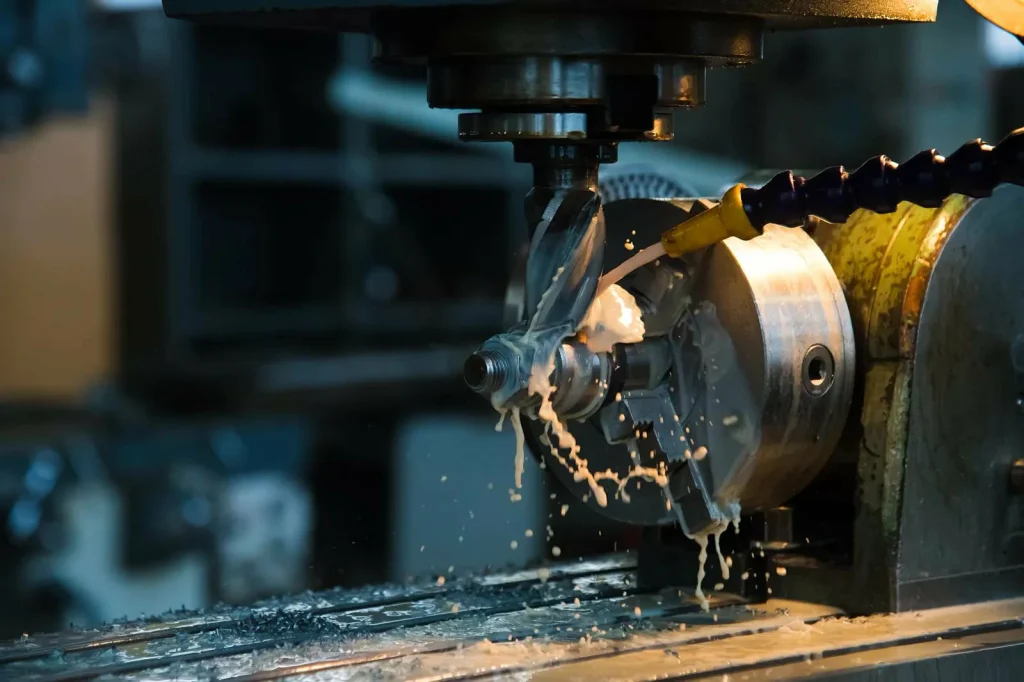
The rules below focus on feasibility first, then cycle time, tool wear, surface finish, and common redesign options when a square mating part forces a sharp-looking corner.
Why Sharp Internal Corners Cannot Be CNC Milled
Internal corners that look sharp in CAD cannot be milled perfectly because end mills are round; this section explains the physical limits of rotating tools and the impact on machining feasibility.
Rotating End Mills Produce Minimum Radius Equal to Tool Radius
Standard Fresatura CNC with rotating cylindrical end mills cannot produce a perfectly sharp internal corner; the minimum achievable CNC Internal Corner Radius is set by the tool’s radius, making radius specification critical for machining internal corners effectively., solving the sharp corner problem, and designing internal features efficiently. The tool diameter to radius ratio is a key factor because it determines how small a radius the tool can physically achieve without excessive deflection or vibration. The tool diameter to radius ratio is a key factor because it determines how small a radius the tool can physically achieve without excessive deflection or vibration. EDM or special tooling is required for sharper corners.
A standard end mill is cylindrical. When it cuts an internal corner, the cutter’s outer diameter sets the smallest possible inside radius. Even if the toolpath drives to a mathematically sharp 90° vertex, the tool cannot physically create that vertex because the tool has a finite radius.

Designers should verify the CNC Internal Corner Radius to ensure the chosen tool can achieve the required feature without excessive deflection. Designers should check the tool diameter to radius ratio to ensure the planned radius does not force a tool too small for stability.
So for CNC milling with rotating tools:
- Minimum achievable internal corner radius ≈ the cutting tool radius (half the tool diameter).
- To put it simply, you cannot mill an internal corner radius smaller than the tool radius without changing tools or processes.
This is why internal corner radii are best treated as a tooling choice, not just a cosmetic feature. If the design calls out an internal corner radius that forces a very small tool, it also forces lower stiffness, more deflection risk, and longer machining time.
Can CNC Machining Produce Sharp Ninety Degree Corners
Not with standard rotating end mills. A mill leaves an internal radius because the tool is round, so the “sharp” corner becomes a fillet whose size is tied to the tool diameter. If you truly need a sharp internal 90°, you usually switch to non-standard processes (like EDM) or redesign the corner with relief features such as dog-bones or T-bones.
Effects of Tiny Internal Radii on Tooling and Machining
When an CNC Internal Corner Radius is small, the tool diameter must be small enough to fit that corner, which increases programming time, reduces machining efficiency, may require electrical discharge machining, and can shorten tool life due to sharper corners and higher stress on the cutter. Small tools are less stiff, especially in deep pockets where tool stickouts increase. That combination raises the odds of deflection (the tool bending away from the cut) and chatter (self-excited vibration that leaves washboard surface finish and can break tools).
Tight corners also create a toolpath problem: the cutter has to turn sharply, and the machine often slows down to maintain accuracy. That slowdown increases time and can worsen chatter because the tool may rub instead of cut cleanly.
A simplified view of what the cutter is trying to do at an internal corner:
| Desired CAD Corner | End Mill Toolpath Reality |
|---|---|
| +———+ | +———+ |
| +———+ | +–)—— |
| Inside vertex cannot be “pointed” by a round tool |
In practice, forcing tiny internal corner radii tends to stack several penalties at once:
- Smaller diameter tool required (less stiffness)
- Longer cycle time (more passes, slower cornering)
- Higher tool wear and breakage risk
- More sensitivity to material (harder materials punish small tools faster)
- More variation in actual corner size if deflection becomes meaningful
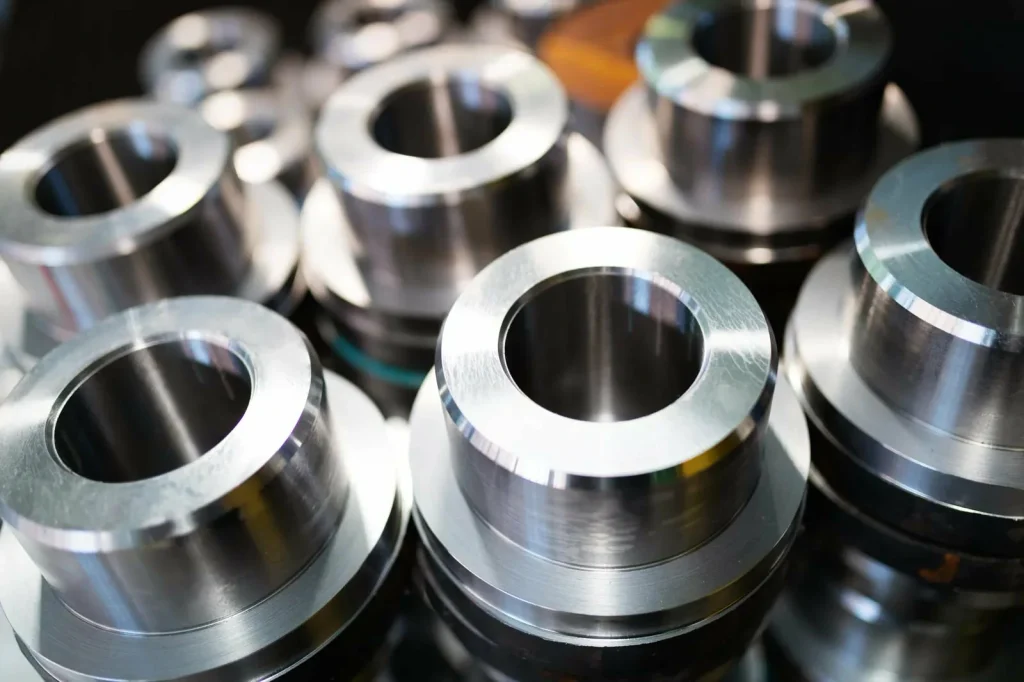
Non Standard Processes for Sharp Corners and Cost Impact
If the requirement truly is “square internal corner,” shops typically consider:
- EDM (electrical discharge machining) for sharp internal geometry, especially where milling cannot reach the corner. EDM can produce sharper internal features than milling because it does not rely on a round rotating cutter.
- Special tooling or secondary operations that approximate sharpness but add complexity.
These options tend to cost more because they add setup time, extra operations, and often longer programming and inspection efforts. They also tend to be used only when the design requirement justifies it (fit, sealing, or functional geometry that cannot accept relief).
CNC Internal Corner Radius Design Rules for DFM
Learn the core rules for selecting internal corner radii that balance tool capability, part stability, cycle time, and finish quality.
Rule One Minimum Internal Radius Equals Tool Radius
Start with the non-negotiable constraint: the internal corner radius must be at least the tool radius.
That means you should decide (at least roughly) what tool diameter you want the shop to use, then size the corner radius around that tool:
- Planned tool diameter = ( D )
- Tool radius = ( D/2 )
- Minimum internal corner radius ≥ ( D/2 )
This rule matters even more in pockets that have many corners. If one corner forces a smaller tool, the shop may have to cut the entire pocket with that smaller tool (or add tool changes and extra passes). Either way, the smallest radius can dominate the machining time and risk.
Rule Two Radius Should Exceed One Third of Cavity Depth
A common depth-based rule is:
Recommended internal corner radius ≥ 1/3 of cavity depth
This is not a geometry limit like Rule 1. It is a stability and accuracy rule. The deeper the cavity, the more tools stickout you need to reach the floor. More stickouts reduces stiffness. A larger corner radius lets you choose a larger tool, and larger tools remain stable at greater depths.
Rule of thumb: choose internal corner radius ≈ 1/3 of cavity depth to maintain rigidity and reduce deflection risk.
This guideline is most helpful when you are still early in design and do not know the exact toolpath. It is a quick way to flag “deep + tight” pockets that often run into chatter, poor surface finish, or corner size variation.
Clearance Guidelines for Smoother Internal Corner Machining
Even when the internal corner radius is technically millable (≥ tool radius), it may still be inefficient. When the corner radius matches the tool radius too closely, the tool has to make a tight turn with little clearance. That can force slowdowns and increase rubbing.
Two common clearance-style approaches are used in practice:
- Target internal radius ≈ 130% of tool radius (Rcorner ≈ 1.3 × Rtool; e.g., 6.5 mm for a 5 mm tool).
- Alternatively, add an additive clearance of ~0.02″–0.05″ (0.5–1.3 mm) beyond the minimum tool-fit radius.
The intent is the same: give the cutter room to maintain a smoother arc and more consistent chip load through the corner.
Concept sketch:
| Nominal (Just Fits) | Relieved (Clearance Added) |
|---|---|
| Tool Radius = Rtool | Tool Radius = Rtool |
| Internal Corner R = Rtool | Internal Corner R = Rtool + Clearance |
| Tight Turn, More Slowdown | Smoother Turn, Steadier Cut |
If you do not want to decide between “130%” and “+0.02 to +0.05,” treat them as two ways to express the same design intent: avoid specifying an internal radius that is exactly the minimum unless you have a reason.
Recommended Radius for CNC Internal Corners
Use a radius that clears the cutter you want the shop to use, then add margin; consider the largest radius your design allows while still maintaining design intent, balancing radius machining, tool vibration, corner geometry, and machining internal pockets with standard tool sizes. As a baseline, set internal radius ≥ tool radius, then consider a relief approach like ~130% of tool radius or adding 0.02″–0.05″ so the tool can turn the corner without heavy slowdown. For deeper cavities, check the radius ≥ 1/3 of cavity depth guideline to reduce deflection and chatter risk.
Internal Corner Radius Recommendations by Depth
Reference values showing how pocket depth informs recommended internal radii for stable, repeatable machining.
How Internal Corner Radius Influences Cycle Time and Risk
The table below is a planning aid. It mixes two ideas:
- A minimum internal radius (driven by “you need some tool to fit,” so very small radii are technically possible in shallow pockets)
- A recommended internal radius using the 1/3 depth benchmark, then sanity-checked against the common 3–6 mm range used in many general pockets
Because this article is limited to the verified values provided, treat the “recommended” column as a design-screening target, not a guarantee.
| Cavity depth | 1/3 depth benchmark (recommended) | Notes (how to interpret) |
|---|---|---|
| 3 mm | 1 mm | Shallow features can use small radii, but tiny tools can still be fragile. |
| 6 mm | 2 mm | Often workable if the pocket is open and access is good. |
| 9 mm | 3 mm | Reaches the lower end of common industrial defaults (3–6 mm). |
| 12 mm | 4 mm | Common for pockets; supports using more stable tooling than very small radii. |
| 15 mm | 5 mm | In the middle of the 3–6 mm “default” band for many designs. |
| 18 mm | 6 mm | Upper end of the common 3–6 mm defaults; often chosen for stability. |
Where the “minimum” fits: minimum internal corner radius is still set by the tool radius (Rule 1). The table does not replace that; it helps you avoid the common failure mode of deep pockets with corner radii that force small tools.
What is the ideal radius for a 1/2″ pocket? If the pocket depth is 1/2″, the 1/3-depth guideline points to about 1/6″ radius (since 1/3 of 1/2″ is 1/6″). That is about 0.167″, which is about 4.2 mm. In practice, that lands near the common 3–6 mm range, so a radius around 4–6 mm is often a reasonable starting point if the design can accept it, then confirm it against the tool you want to run.
Concept Chart Showing How Internal Corner Radius Affects Cycle Time and Risk
Exact cycle time depends on material, toolpath strategy, and machine dynamics, so the safest way to present this is as a qualitative trend:
| Internal Corner Radius | Cycle Time / Risk Description |
|---|---|
| Small | High risk, long time; tight radius forces small tool and slow cornering |
| Increasing | Moderate risk; gradually smoother motion as radius increases |
| Grande | Low risk, shorter time; larger radii allow larger tool and smoother motion |
How does corner radius affect machining speed? A larger cnc internal corner radius usually increases machining speed because it allows a larger, stiffer end mill and a smoother toolpath through the corner. Small radii force small tools and sharper direction changes, which often means more passes and slower motion in corners.
Common Internal Corner Radius Defaults Three to Six Millimeters
A 3–6 mm internal corner radius is often used as a general default range because it balances several needs:
- Common pocket depths where the 1/3-depth guideline points to radii in this band
- Reasonable compatibility with many end mill choices
- Lower stress concentration than sharp internal corners in loaded parts
- Less corner slow-down than very tight radii
This range fits best when the pocket is not extremely deep relative to tool access and when the mating part does not require a perfect square internal corner. It is also a practical compromise when multiple pockets exist on the same part and you want consistent tooling.
Recommended Internal Corner Radius for Pocket Features
A common starting point is 3–6 mm for many general pockets, then adjust based on pocket depth and the cutter you want to use. For deeper pockets, apply the radius ≥ 1/3 of cavity depth guideline to reduce deflection and chatter risk. If the pocket must accept a square mating part, consider a relief feature rather than forcing a tiny radius.
Tool Selection for Internal Corner Machining
Comparison of flat end mills, bull-nose end mills, and smaller tools to show how corner radius choices interact with tool geometry and performance.
Comparison of Flat End Mill Bull-Nose and Small Tool Radius Trade-Offs
Corner geometry is not only about the radius callout; it is also about which tool profile you can tolerate on the floor and walls.
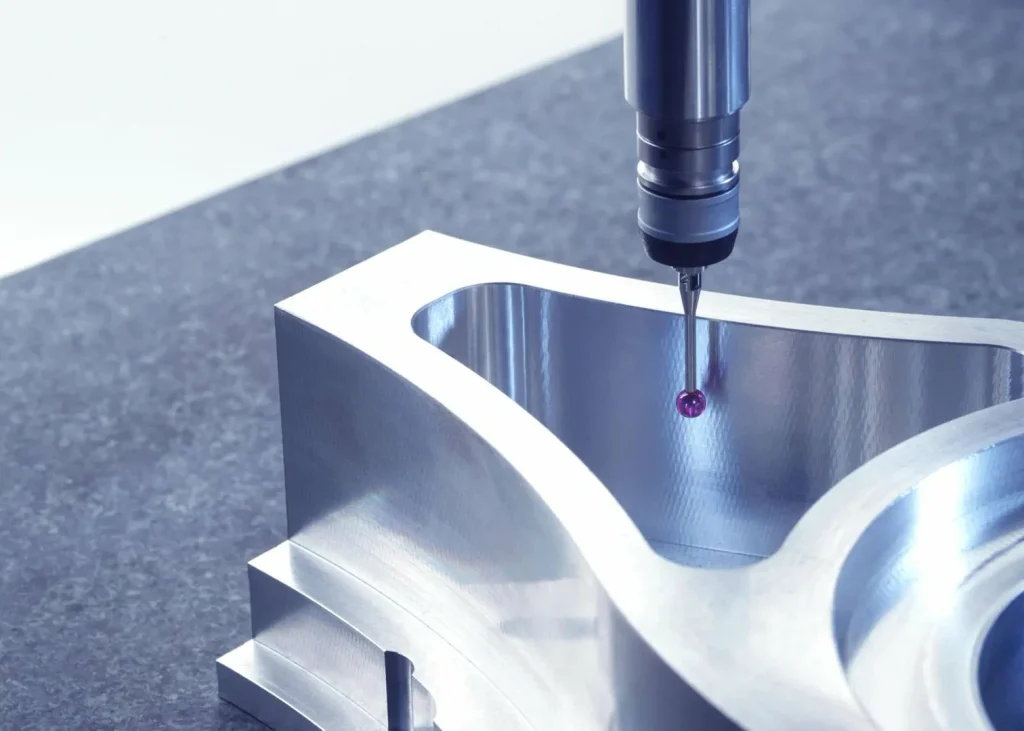
| Tool choice | Cosa fa bene | What it struggles with | Corner radius implication |
|---|---|---|---|
| Flat end mill | Flat floors, crisp floor-to-wall transitions (when allowed), general pocketing | Tight internal corners if tool is large; stability drops if diameter must shrink | Minimum internal wall radius is tied to tool radius; forcing small radii means smaller tools |
| Bull-nose end mill (corner-radius end mill) | Blends small floor radius, can reduce chipping at floor edges, helps in some finishing | Cannot make a perfectly sharp internal floor corner; leaves a floor radius by design | Useful when a small floor radius is acceptable; can support stability and finish in some pockets |
| Smaller diameter tool (any geometry) | Can reach smaller internal radii | Higher deflection and chatter risk, especially with depth; typically slower | Achieves smaller internal corner radii but increases time/cost and risk |
A common misunderstanding is that you can “just use a smaller tool” with no other impact. In reality, tool diameter, stickout, and depth drive stability together.
Benefits of Larger Internal Corner Radii on Tool Performance
Larger internal corner radii lets you pick larger end mills. Larger tools are stiffer, and stiffness helps in several linked ways:
- Less deflection, so the corner size is closer to nominal
- Lower chatter risk, so surface finish is more consistent
- Lower breakage risk compared with very small tools in deep engagement
- Fewer passes needed to clear material, which reduces machining time
This is why many machinists react strongly to “tiny radius everywhere” drawings: those features push the entire machining plan toward small tools and slow toolpaths.
Deep Pocket Considerations for Radius and Tool Stickout
Deep pockets combine two stressors:
Deep pockets combine two stressors: longer tool stickout to reach the floor and higher leverage on the tool. The tool diameter to radius ratio becomes critical here; using a tool too small relative to the required corner radius can increase CNC machining time and cost, reduce machining efficiency, and make tool vibration more likely.
A simple way to visualize the stability problem:
| Caratteristica | Short Stickout (More Stable) | Long Stickout (Less Stable) |
|---|---|---|
| Mandrino | Mandrino | Mandrino |
| Strumento | End Mill | End Mill |
| [ ] Deep Pocket | ||
| Note | Tool is more stable | Tool behaves like a flexible beam |
This is where the radius ≥ 1/3 depth guideline is most valuable. If the corner radius scales with depth, you are more likely to be able to use a tool diameter that stays stable at that reach. If the corner radius stays tiny while depth increases, the tool choice gets painted into a corner: small diameter, long stickout, and a higher chance of chatter.
How Larger Corner Radii Reduce Tool Wear and Chatter
Often, yes. A larger internal corner radius usually allows a larger, stiffer tool and a smoother toolpath through the corner, which reduces vibration and makes cutting forces more stable. That tends to reduce chatter and tool wear compared with forcing a small tool to turn a tight corner at depth.
Difference Between Floor Radius and Wall Radius
Clarifies the design and machining distinctions between vertical wall corners and floor-to-wall fillets.
Vertical Wall Radius Guidance and Floor Radius Constraints
Internal radii show up in two places that are easy to confuse:
- Wall (vertical) corner radius: where two vertical walls meet in plan view (the typical “pocket corner”)
- Floor (horizontal) radius: where the pocket floor meets a wall (the fillet at the bottom edge)
The design rules and tooling impacts differ. The wall corner radius is mostly about tool diameter and toolpath turning. Floor radius is about tool tip geometry and whether the floor must be flat.
If you only specify “R” without clarifying where, you can end up with a pocket that is easy to mill but hard to inspect, or one that meets the wall radius but violates a flat-floor requirement.
Minimum Feasible Floor Radius and Flat Floor Guidelines
If a controlled/measurable floor fillet is required, keep it ≥0.5–1 mm. If a flat floor is required, do not specify a floor radius; allow standard flat-bottom end mills to create a functional sharp-ish floor-to-wall intersection with minor edge breaks per shop practice.
A practical way to treat floor radius decisions:
| Floor requirement | Approccio tipico | Note |
|---|---|---|
| Flat floor required, sharp-ish floor edge acceptable | Flat end mill, minimal or no intentional floor radius | Inspectability can be simpler with a clear floor plane; corner may still have a small break per shop practice |
| Small floor radius allowed | Bull-nose end mill to leave a controlled radius | Minimum feasible floor radius often cited as 0.5–1 mm |
| Floor radius must be large | Use a tool that matches the required floor radius | Watch for changes in floor flatness expectations |
The “no floor radius” preference is not about making an impossible sharp edge. It is about not forcing a blended fillet that complicates measurement or creates a non-flat functional surface.
Bull Nose End Mill Applications for Floor Radius
A bull-nose end mill has a built-in corner radius. That means it naturally produces a floor-to-wall fillet. This can be helpful for reducing edge chipping and improving transitions, but it is not the right choice if the design intent is a crisp floor boundary or if the floor must be truly flat right up to the wall.
Concept profiles:
| Caratteristica | Flat End Mill Result | Bull-Nose Result |
|---|---|---|
| Wall | Wall | Wall |
| Floor | __ Floor (sharper transition) | __ Floor (intentional fillet) |
| Note | Real parts may still get a small edge break | Real parts may still get a small edge break |
If a drawing calls out a small floor radius while also expecting a crisp floor plane and simple probing, it is worth clarifying which requirement is higher priority.
Quality Checks for Floor Flatness and Surface Finish
Before releasing CAD/drawings, check floor vs wall radii with inspection in mind:
- If the floor must be measured for flatness, confirm the floor geometry is not blended by a required radius.
- If surface finish matters near the corner, note that tight radii and deep pockets raise chatter risk and can degrade finish.
- If a bottom fillet is required, confirm the measurement method can access it (small radii can be hard to verify directly).
- If the part mates to another part at the pocket, confirm whether the mating feature needs clearance at the bottom edge as well as in the wall corner.
Sharp Corner Alternatives Dog Bone T Bone or EDM
Introduces relief and special tooling options for maintaining functional fit when square corners are required.
Decision Matrix Redesign Radius Dog-Bone T-Bone EDM Impact
When a design “needs” a square inside corner, it often means the mating part has a square external corner that must seat fully; you may use dog-bone or T-bone reliefs, rounded internal corners, or other radius machining strategies to prevent tool breakage, reduce tool vibration, and follow design guidelines for CNC machining. Milling alone cannot create that square internal vertex, so you choose between changing the corner expectation or adding a feature that preserves fit.
Decision matrix (qualitative):
| Opzione | What changes in geometry | Cost/time direction | Quando si adatta |
|---|---|---|---|
| Redesign with larger internal radius | Corner becomes intentionally rounded | Usually decreases machining time and risk | When mating part can accept clearance or has its own chamfer/radius |
| Dog-bone relief | Adds a circular relief at the corner that clears the mating square | Adds some machining but avoids EDM | When you need the square part to seat and can tolerate a visible relief |
| T-bone undercut | Adds relief shaped to preserve a straight wall while clearing the corner | Adds machining complexity | When wall alignment matters and you want controlled clearance for the mating corner |
| EDM / special tooling | Produces a sharper internal corner than milling | Often increases complexity and cost | When geometry or function truly needs sharp internal corners |
This is less about “best practice” and more about choosing which compromise is acceptable: visible relief, changed corner radius, or added process steps.
Choosing Dog Bone or T Bone for Square Part Fit
Both dog-bone and T-bone features are forms of corner relief design. They let a square external corner fit into an internal corner that is otherwise rounded by an end mill.
- A dog-bone relief is typically a round pocket extension at the corner. It is simple and often uses the same cutter as the pocket.
- A T-bone undercut is shaped so the wall line can stay “square” in plan view while still clearing the mating corner.
Concept top views:
| Relief Style | Top View Representation | Descrizione |
|---|---|---|
| No Relief Milled | +—- | |
| Dog-Bone Relief | +—- | o |
| T-Bone Relief | +—- | _) |
Pick based on what must be preserved:
- If the mating requirement is only “the square peg must seat,” a dog-bone is often enough.
- If the wall position and straightness at the corner matters more, a T-bone style relief may preserve the functional wall better.
When EDM or Special Tooling Is Justified
EDM is often chosen when the internal corner sharpness is not negotiable. It is also considered when materials are difficult to machine with tiny tools, or when the corner is deep and the required radius forces a fragile cutter.
In hard-to-machine alloys such as titanium, the risk side of tiny radii becomes more severe: small tools plus deep reach can push chatter, wear, and breakage risk high enough that a non-milling process becomes the more predictable path for the corner requirement. The trade is added process complexity.
When to Use Dog Bone or T Bone Relief
Use a dog-bone or T-bone when a square mating part must sit fully and you cannot increase the internal corner radius. A dog-bone is a simpler relief and is often acceptable if the relief shape does not interfere with function. A T-bone undercut is used when you need to preserve straight wall alignment while still clearing the mating corner.
Cost and Lead Time Impacts of Corner Radius Choices
Shows how tight internal corners influence machining time, tool wear, and overall manufacturing cost.
How Tiny Internal Radii Increase Machining Cost
Small internal corner radii tend to increase cost for three linked reasons:
- Small tools remove material slowly, so more time is spent clearing the same pocket volume.
- Feeds and speeds may need to be reduced to keep the tool stable, especially at corners where direction changes are sharp.
- More passes are needed because small tools have less allowable engagement per pass in many setups.
Concept chart:
| Internal Corner Radius | Cycle Time / Risk | Note |
|---|---|---|
| Small | Alto | Tight radii require small tools and more passes |
| Medio | Medio | Moderate radius allows balanced tool choice and reasonable speed |
| Grande | Basso | Larger radii allow bigger, stiffer tools and fewer passes |
This is why “make the radii bigger” is common advice from machinists when a quote comes back higher than expected. The smallest corner radius can control the tool selection for the whole feature.
Optimizing Internal Radius Clearance to Improve Toolpaths
A common optimization is to take a corner radius that is technically machinable but tight, then add a small amount of clearance: 0.02″–0.05″ beyond the “just fits” radius. The goal is to reduce sharp cornering motion and let the tool maintain a smoother arc.
Conceptual before/after:
| Scenario | Descrizione |
|---|---|
| Before (just fits) | Toolpath makes a tight arc and may slow down hard at the corner |
| After (+0.02″ to +0.05″ clearance) | Toolpath arc is smoother, less corner slowdown, steadier cut |
This change is often small enough not to affect mating function, but large enough to change how the CAM system and machine dynamics behave at each corner. If your pocket has many corners, that time saving can add up.
Risk and Cost of Small Internal Radii on Machining
Tight internal radii mainly increase cost by increasing time, but the risk side is also real. Tiny tools in deep pockets increase the chance of tool breakage or chatter-based scrap, which can affect schedule and rework.
Quote red flags tied to corner radii:
- Internal corner radii that are smaller than standard tool options, forcing special tooling or extra operations
- Deep pockets that also specify very small radii (violates the 1/3 depth guideline)
- Many repeated pockets where one tight radius forces the entire tool strategy to shrink
- Requirements that imply sharp internal corners without allowing relief (dog-bone/T-bone) or EDM
This is also where clear drawing notes help: if a corner is non-functional, allowing a larger radius or a relief feature can remove a lot of hidden manufacturing risk.
Interactive Corner Radius Recommendation Tool Concept
A simple calculator concept that matches the rules in this article would take:
- Inputs: cavity depth, desired internal corner radius, and material (material does not change the hard geometry rules, but it helps flag risk)
- Uscite:
- Pass/fail for radius ≥ tool radius (requires the user to pick a planned tool diameter, or the calculator can suggest “you will need a tool with diameter ≤ 2×radius”)
- Pass/fail for radius ≥ 1/3 depth
- A note recommending clearance using ~130% of tool radius or +0.02″–0.05″ if the corner is “minimum fit”
The value is not perfect prediction. It is early detection: it catches the “deep + tiny corner” condition before it becomes a quote surprise.
Real World Examples And Case Studies With Outcomes
Illustrates how following internal radius guidelines improves tool stability, cycle time, and part performance in real applications.
CNC Internal Corner Radius Case Studies and Examples
Context: Titanium alloy components with internal pockets used in a high-load application. Corner geometry mattered both for manufacturability and for reducing stress concentrations.
What was done: The design used appropriate internal radii rather than insisting on sharp corners. 5-axis CNC toolpaths were used to access features while maintaining stable cutting engagement.
Outcome: The parts met tight requirements while reducing stress concentration concerns associated with sharp internal corners. The radius choices also supported feasible machining without forcing extreme small-tool strategies.
Why it matters: In high-stress designs, corner radii influence both machining feasibility and part performance. A “sharp-looking” corner can be a stress riser and a machining cost driver at the same time.
Case Study Pocket Machining Optimization With Radius Guidelines
Context: A design included deep cavities where the original internal corner radius was small. The shop expected higher deflection risk and inconsistent finish because the tool diameter would need to be small.
What was done: The pocket corners were redesigned to meet two screening rules: radius ≥ tool radius and radius ≥ 1/3 cavity depth. Bull-nose end mills were used where a small floor radius was acceptable.
Outcome: Tool stability improved, surface finish was more consistent, and cycle time decreased because a stiffer tool could remove material faster with less corner slowdown.
Why it matters: This is the most repeatable improvement for everyday CNC milled pockets: scaling corner radius with depth keeps tool choices practical.
Case Study Sharp Corner Avoidance Redesign Fillets And T Bone Undercuts
Context: A part was drawn with sharp internal corners that would have required non-standard processes. That pushed the plan toward EDM or multi-step workarounds.
What was done: The design was updated to use small internal fillets where function allowed (including 0.5 mm+ as a feasible small floor radius range where relevant), and used T-bone undercuts in locations where a square mating corner had to sit.
Outcome: The redesign avoided EDM and enabled more direct CNC machining using standard end mills and reachable toolpaths.
Why it matters: Many “sharp corner” requirements are really “square fit” requirements. Relief features often satisfy fit without paying for true sharp internal corners.
Why Sharp Internal Corners Increase Machining Complexity
When a drawing calls out a sharp internal corner, a shop has to interpret what you really mean:
- Do you mean “no visible fillet,” even if a small radius exists?
- Do you mean “a square mating part must seat fully” (which could be solved by dog-bone/T-bone)?
- Do you mean “a true sharp internal vertex,” which points to EDM?
That ambiguity alone can add time. And if the requirement is truly sharp, the workaround is rarely a single clean milling operation. The common pain point reported by machinists and buyers is that sharp internal corners trigger extra steps, tool changes, slower feeds, or a process change, and the quote reflects that.
Common Mistakes and DFM Checklist for Internal Corners
Provides a concise checklist of frequent design errors and rules to avoid costly machining issues.
Mistake Specifying Internal Radii Smaller Than Tool Limits
The most common error is calling out an internal corner radius that is smaller than what a reasonable end mill can achieve, ignoring standard tool sizes, the relationship between tool radius and corner radius in CNC machining, and the effects on programming time, machining internal corners, and overall CNC machining cost. Even if a tiny tool exists, it may not be stable at the required depth.
A fast pre-quote check is to ask: “What tool diameter does this radius force?” Since minimum internal radius is the tool radius, a very small radius forces a very small cutter, and that decision cascades into time and risk.
Mistake Deep Pocket With Tiny Radius Increases Deflection Risk
Deep pockets are already stability-limited because tool stickouts increase with depth. Adding a tiny internal corner radius makes it worse by forcing a small tool at long reach.
This is exactly what the radius ≥ 1/3 depth guideline is meant to flag. If you cannot meet it, that does not mean the part is impossible, but it means you should expect trade-offs: slower machining, higher chatter risk, and tighter process control.
Mistake Forcing Floor Radii On Flat Bottom Features
Another frequent issue is specifying a floor radius when the function expects a flat floor and a clear wall intersection. A required floor fillet may force a bull-nose tool or blending passes that can complicate inspection and floor flatness evaluation.
If a floor radius is required, keep it intentional and measurable. If a flat floor is required, avoid adding a floor radius callout that conflicts with that intent.
Internal Corner Radius DFM Checklist Rules Depth and Relief
Use this as a CAD release checklist for cnc internal corner radius decisions:
- Wall corner radius
- Internal radius ≥ tool radius (plan tool diameter early)
- If possible, add clearance: ~130% of the tool radius or +0.02″–0.05″
- Check depth: internal radius ≥ 1/3 of cavity depth (risk flag if not)
- Pocket depth and access
- Deep pocket + tight radius flagged for deflection/chatter risk
- Confirm tool stickout is reasonable for the planned cutter size
- Floor radius
- If flat floor is required, avoid forcing a floor fillet
- If floor radius required, keep within feasible small range (0.5–1 mm minimum feasible is commonly cited)
- Square-corner functional fit
- If a square mating part must sit: consider dog-bone or T-bone relief
- If a true sharp internal corner is required: plan for EDM/special processes
- Drawing notes
- Clarify which radii are functional vs non-functional
- Clarify whether relief is acceptable in corners intended for mating
Ending Decision Logic
For most CNC milled pockets, internal corner radii are a tooling and stability choice more than a styling choice. Start with feasibility: internal radius must be at least the tool radius. Then check stability: for deeper cavities, use radius ≥ 1/3 of cavity depth as a fast screen to avoid long-stickout small-tool problems. If you are near the minimum, add a margin using ~130% of the tool radius or +0.02″–0.05″ so the tool can turn corners smoothly.
When a square mating part drives the requirement, do not treat it as a “sharp corner” problem first. Treat it as a “fit” problem, then decide between a larger radius, a dog-bone/T-bone relief, or EDM if the corner truly must be sharp.
Domande frequenti
Standard CNC milling uses rotating cylindrical end mills, so the tool always leaves a radius at an internal corner. The smallest possible internal radius is set by the tool radius. To get a sharper internal corner than milling allows, you typically need EDM or a redesigned relief feature.
Using the common guideline of radius ≥ 1/3 of pocket depth, a 1/2″ deep pocket points to about 1/6″ radius (about 0.167″, or about 4.2 mm). That also sits near the common 3–6 mm range used for many pockets. Final sizing should still match the cutter you expect to use.
A dog-bone is a corner relief feature added to a pocket so a square external corner can seat fully. It adds a circular relief at the pocket corner beyond the nominal wall lines. This avoids requiring a perfectly sharp internal corner from an end mill.
Avoid deep pockets with very small CNC Internal Corner Radius, because that forces small tools with long stickout. Use radius ≥ 1/3 of cavity depth as a stability check, and avoid “just-fit” radii by adding clearance (such as ~130% of tool radius or +0.02″–0.05″). Larger radii often allow stiffer tools and smoother cornering.
Yes. EDM can produce sharper internal corners than milling because it does not rely on a round rotating cutter. It is usually chosen when a true sharp internal corner is functionally required and relief features or larger radii are not acceptable.
Riferimenti
https://s3.amazonaws.com/b2lead2s3/pdf/103012_FictivCNCDesignGuide1-compressed.pdf?utm_



 Italian
  English
  German
  French
  Spanish
  Polish
  Czech
Czech  Japanese